ATHENE reserach in the ARD
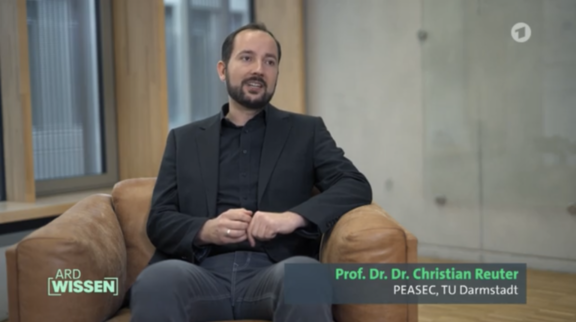
In the new ARD documentary "ARD Wissen: Deutschland im Ernstfall: Wie schützen wir unsere Infrastruktur?", ATHENE researchers Prof. Christian Reuter, head of the ATHENE research area "Secure Urban Infrastructure (SecUrban)" and Dr. Marc-André Kaufhold report on their research on automated collection of public data sources and data evaluation with credibility analysis and information prioritization. Thisr research was conducted as part of the CYWARN project and the ATHENE research area Secure Urban Infrastructure (Securban).
read more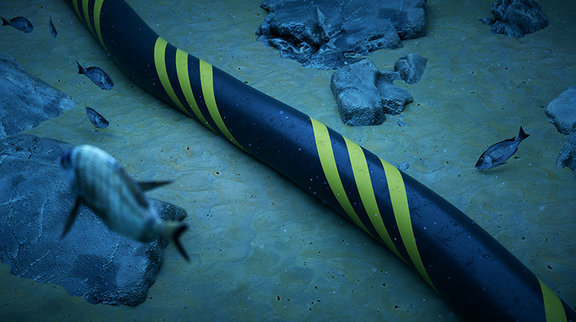
Fragile protection of our communications via submarine cables
ATHENE researchers study states' vulnerability to submarine cable failures
Today, we take it for granted that we can call up a website, stream a movie or be active in social networks within seconds. Many people are often unaware that the data transfer takes place via thousands of kilometers of cable laid at the bottom of the ocean. Today, around 98 percent of international Internet traffic is handled via undersea communication cables. Coastal and island states are highly dependent on this physical infrastructure to provide Internet connections. However, although an annual average of about 100 submarine cable failures of human or natural origin occur, there is currently no global analysis that assesses the vulnerability of individual states to failures on a global scale.
ATHENE scientists Jonas Franken, Thomas Reinhold and Prof. Christian Reuter from the Chair of Science and Technology for Peace and Security (PEASEC) at TU Darmstadt have tackled this issue.