Kickoff of the “Secure Critical Infrastructure” Lecture Series in the 2026/2027 Winter Term
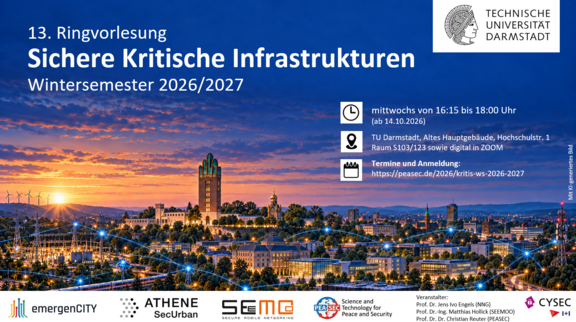
The 13th lecture series in the “Secure Critical Infrastructure” programme is taking place this winter semester. To kick things off, Prof. Dr. Dr. Christian Reuter, a researcher at ATHENE, will introduce the lecture series and the topic of securing critical infrastructure on October 14.
The series will address various critical infrastructures and their security challenges. Speakers from research institutions, companies, government agencies and critical infrastructure operators have been invited to give specialised presentations on specific aspects of the topic. The 'Secure Critical Infrastructures' lecture series is organised by ATHENE researchers Prof. Dr.-Ing. Matthias Hollick, Prof. Dr. Dr. Christian Reuter and Prof. Dr. Jens Ivo Engels.
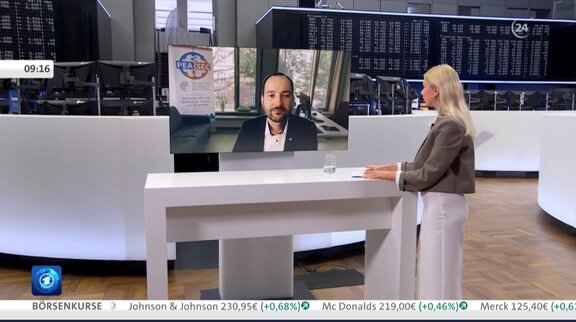
How Vulnerable Is Our Economy 25 Years After 9/11? Christian Reuter in live-Interview with tagesschau24
Prof. Dr. Dr. Christian Reuter spoke on the tagesschau24 programme Update Wirtschaft on the occasion of the 25th anniversary of the 9/11 attacks. The interview addressed the vulnerability of the economy to infrastructure attacks, societal resilience, and research at TU Darmstadt within emergenCITY and ATHENE.
read more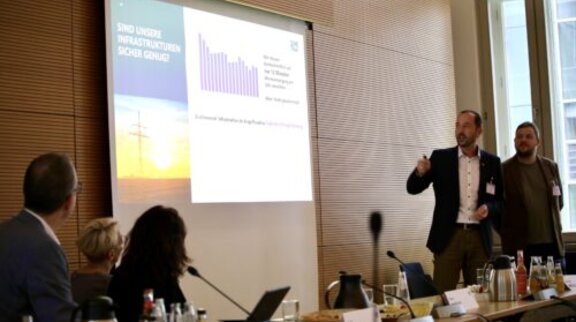
Shaping Democracy – Strengthening Resilience: ATHENE researchers engage in dialogue with policymakers in the German Bundestag
Democratic processes are under pressure, and critical infrastructure and digital environments are becoming targets of attacks and manipulation. How can RMU’s expertise contribute to solutions—and be linked to political perspectives and needs?
read more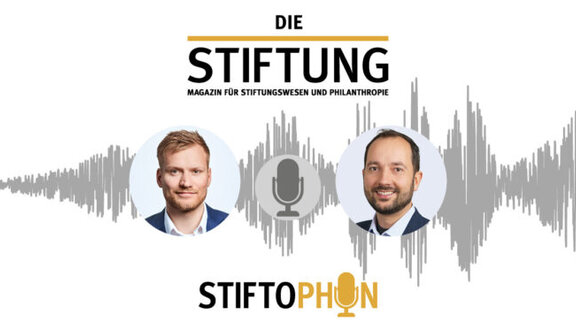
Prof. Dr. Dr. Christian Reuter on the FAZ’s STIFTOPHON podcast: Was macht Infrastruktur resilient?
In this episode of STIFTOPHON, Prof. Dr. Dr. Christian Reuter discusses critical infrastructure, cascade effects, and the role that civil society can play.
read more
Award for outstanding scientific achievement for a master's thesis on the safety of underwater data cables
Martin Hagemeier was awarded the Prize for Outstanding Scientific Achievement by the Association of Friends of the Technical University of Darmstadt (Vereinigung von Freunden der Technischen Universität zu Darmstadt e.V.) for his master’s thesis.
read more